Posted on February 10, 2026
Not Just for Creators: 12 Professions That Can...
When people think of the word “creator,” they tend to think of influencers, content creators,…
Read More

Posted on February 23, 2026
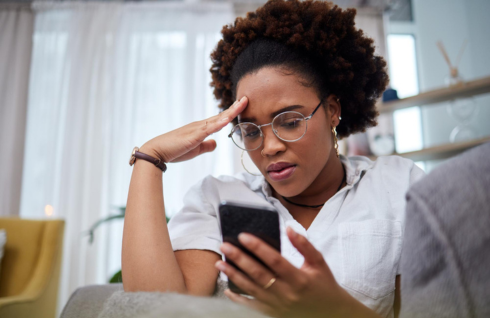
For years, women creators, entrepreneurs, and professionals have been told that visibility is the price of success online. Post more. Share more. Engage more. Be available. Be searchable. Be traceable. Somewhere along the way, content stopped feeling like self-expression and started to feel like extraction.
The polished feeds and growth metrics present a false reality that shows mainstream platforms exist to collect attention, data, and labor rather than to protect their users who create value. Women experience growing unease, involving ownership rights, consent matters, safety issues, and income disclosure.
A transformation is occurring because of this situation. Women are increasingly seeking a permission-based social platform – one where content, connection, and monetization happen by choice, not coercion.
This is the rise of permission-based social, and it is reshaping where women choose to show up.
Social platforms use a common operational framework, which states that your content creates user engagement while user engagement generates data, which results in company profits. This process occurs without users receiving a proper explanation or their explicit permission. The analysis of posts occurs through audience monitoring, and monetization takes place through confidential systems that women have limited authority over.
For many creators, this raises critical concerns around content ownership for creators. Who truly owns what you post? Who benefits from it long-term? And who decides how it is used?
Women are asking harder questions now, especially as their content becomes a source of income. The idea that a platform can quietly collect behavioral data while controlling reach, payouts, and visibility no longer feels acceptable.
This is where creator rights and ethical social media enter the conversation.
Women who earn money through their online work face greater challenges than other people. Income serves three purposes because it provides both operational funds and essential life resources and financial protection to individuals. Most platforms treat their users’ earnings as data points that they can use for optimization, analysis, and restriction purposes.
This lack of income privacy creates anxiety. Sudden algorithm changes. Shadow bans. Payment delays. Account freezes. All without explanation.
Women creators are increasingly rejecting systems that profit from their labor while offering little clarity or protection in return. They want creator trust and transparency, not guesswork.
Permission-based social flips the traditional model. Instead of default access, it prioritizes consent. Instead of surveillance, it prioritizes clarity. Instead of extraction, it prioritizes alignment.
In a permission-based social platform, women decide:
This matters deeply in a digital environment where overexposure has become normalized. Women are choosing platforms that respect content consent and permissions, not ones that exploit visibility as a prerequisite for opportunity.
One of the most damaging myths in social media is that posting something publicly forfeits control.
For women creators, this means “stolen ideas, exploited content, and unpaid work done under the guise of exposure.”
More women are pushing back, standing up for their rights, demanding platforms that recognize creators’ ownership of their content. This is particularly important for a women creators platform, where these concepts should be core, rather than bonus features.
Most women wish to monetize on their expertise, but they do not want to be monetized on in return. There is an increasing need for creator monetization without tracking, especially for professionals who value separation.
A permission-based social platform, on the other hand, enables a woman to monetize directly, rather than making her audience a product of data. This issue connects to the wider discussion about data privacy rights, which affect creators who now operate in an environment where AI-generated analytic tools exist.
Women do not want to have to choose between earning incomes and maintaining their independence.
Women have different internet experiences. The staff members believe that staff members experience daily harassment through content misuse and boundary violations, which they view as present-time issues. Women must follow ethical social media practices because these standards create essential requirements in their online activities.
A women-first, permission-based social platform builds trust directly into its foundation by prioritizing:
When platforms fail to offer this, women leave. Not quietly—but deliberately.
Mainstream platforms reward performance. Permission-based social platforms reward alignment.
Women are no longer optimizing their lives around algorithms that do not serve them. They are choosing environments that honor intention, not just attention. The current trend establishes new parameters that determine online success.
Women create trustworthy systems that enable sustainable growth because they establish their networks through trust and consent and value-based transactions. That’s the future of the women creators platform.
In this next phase of social media, trust, rather than traffic, will be key. Social media platforms that do not provide trust and transparency to creators will find it hard to retain female creators who have realized their worth.
Permission-enabled systems engender better relationships between users and platforms, ones that involve clear expectations, mutual respect for boundaries, and a feeling that any monetization is legitimate.
For women, however, this is not a preference. It’s self-preservation.
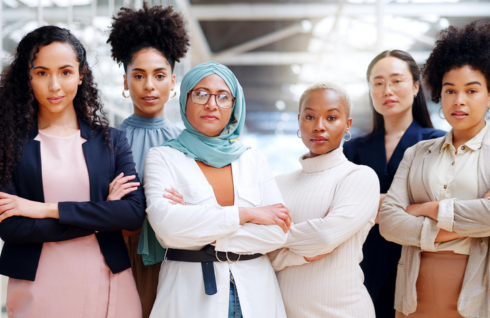
TotalHER was built on the belief that women deserve more than visibility—they deserve agency.
As a women-first social platform, TotalHER centres consent, safety, and respect at every level. Content isn’t treated as data. Income isn’t treated as leverage. And connection isn’t forced through exposure.
Instead, TotalHER embodies the principles of a true permission-based social platform, where women control how they show up, how they connect, and how they earn. It prioritizes content consent and permissions, supports creator monetization without tracking, and fosters creator trust and transparency in a way mainstream platforms simply were not designed to do.
Women are leaving platforms that treat their creativity like a resource to be mined. They are choosing spaces that treat it like something to be protected.
That’s not just a trend. It’s a correction.
Posted on February 10, 2026
Not Just for Creators: 12 Professions That Can...
When people think of the word “creator,” they tend to think of influencers, content creators,…

Posted on January 8, 2026
TotalHER 2025 Feature Recap: A Year of Building...
If you have ever wished for a digital space that truly considers women first, you…

Posted on January 8, 2026
Year-End Reflections: Women Who Chose Themselves (Even When...
Year-end reflection often looks like a highlight reel – curated wins, polished photos, and neat…